This guide is for duct cleaning contractors, HVAC service companies and facilities management operators working across the UAE, Saudi Arabia, Bahrain, Qatar, Oman and Kuwait. It sets out the categories of air treatment equipment that extend a duct cleaning service, what each is used for, and what to confirm before adding one.
The commercial case is access. A crew already on site for duct cleaning is in the plant room and has the client relationship. Disinfection, containment, odour control and drying are separate line items using the same access and often the same crew. The question is which fits the contracts you already hold. If you are still settling the core cleaning fleet, our specification guide covers that decision first.
Disinfection: Fogging Equipment
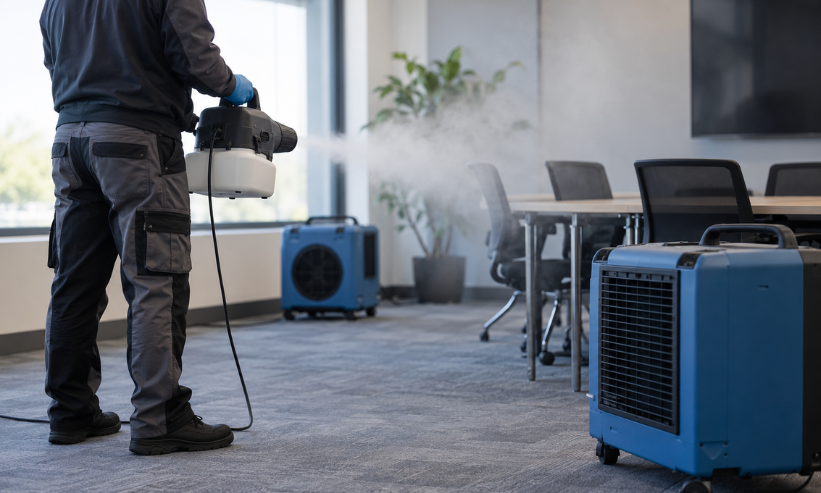
Fogging applies a treatment solution through the system as an ultra-low volume mist after cleaning is complete. The Max Fogger and Max Fogger II Dual Tank cover this category, the dual tank version carrying two solutions so a crew can switch between them without decanting on site.
One point to be clear about with clients. Fogging follows source removal; it does not replace it. NADCA Standards treat physical removal of contamination as the basis of HVAC system cleaning. Selling fogging as a substitute will lose you the contract on the second visit.
Which solution goes in the tank is a separate decision. Our guide to choosing the solution covers the chemistry side.
Containment and Filtration During the Work
Most commercial work here happens in occupied buildings. You rarely get a closed floor, which makes controlling what leaves the work area as much a part of the job as cleaning the system. The Bio Cart 10 is a mobile HEPA dust containment unit built for that, and the Bio Cart 13 LT adds UVC to the same platform.
The Triton 440 provides portable HEPA filtration at 440 CFM for scrubbing air in the space itself, and a HEPA backpack vacuum handles particulate capture where a hose run is impractical. Together these let a crew work a tenanted floor without the complaints that follow visible dust.
Odour Control: Ozone Generators
The TZUV-300 and TZ-1 generate ozone on site for odour treatment, typically after fire, flood or persistent odour complaints that survive cleaning.
This category carries a condition the others do not. Ozone treatment is for unoccupied spaces, with the area cleared during treatment and ventilated before anyone returns. Build that into the method statement and the client conversation from the outset, and confirm the requirements in each territory you work in.
Drying: Dehumidification
The DH-150L dehumidifier sits slightly outside duct cleaning, and that is the point. Water ingress, a failed condensate line or a leak in an occupied building is a different call-out, but it comes from the same facilities contact.
It also addresses the condition upstream of the work. Moisture is what allows microbial growth in a system, so a contractor who can dry a building as well as clean its ducts is solving the cause rather than returning to the symptom every year.
Before You Add a Category
- Confirm the contracts you already hold would actually carry the new line item
- Check the unit is supplied at 220 to 240 volts and 50 hertz for regional supply
- Confirm consumables and spares are held regionally for the category, not just for your cleaning machines
- Establish what crew training the category needs before the first paid job
- For ozone, agree the occupancy and ventilation protocol in writing
- Consider renting a unit for the first few jobs to test demand before committing to a purchase
FAQs
Can the same crew deliver disinfection alongside duct cleaning?
In most cases, yes, with training on the specific equipment. Fogging and containment integrate into an existing cleaning visit rather than requiring a separate mobilisation.
What is the difference between fogging and ozone treatment?
A fogger disperses a liquid treatment as a fine mist through the system. An ozone generator produces a gas on site and is used in unoccupied spaces for odour.
Do we need containment equipment if we already run negative air machines?
They do different jobs. A negative air machine extracts from the system. Mobile containment and air scrubbing control particulate in the occupied space around the work.
Which category is usually added first?
Fogging, because it attaches directly to a cleaning visit you are already selling and needs the least change to how a crew works.
Contact Air-Care
Air-Care Middle East supplies, rents and services the full Air-Care range across the UAE, Saudi Arabia, Bahrain, Qatar, Oman and Kuwait, with filters, spares and technical support held regionally.
Contact us to work out which categories fit the contracts you are running.
Leave A Comment